
Contents
A prompt is the text you use to tell an AI model what you want. The model never sees the picture in your head, only your words. Anything you leave out, it fills in on its own, and it usually picks something average and safe.
The good news: there are no secret magic words. Great results come from describing the shot clearly.
What a prompt is made of
Google's Imagen guide suggests starting from three pillars: subject, context and style. For images and video it helps to break those down into six parts.
- Subject. Who or what is in the frame: age, clothing, material, distinctive details.
- Action. What the subject is doing, where it's looking, what it's holding.
- Setting. Where and when: the location, background, time of day, weather.
- Light. Where it comes from, whether it's soft or hard, what color it is.
- Camera. Shot size, angle, lens, depth of field.
- Style. Photograph, film stock, watercolor, 3D, color palette.
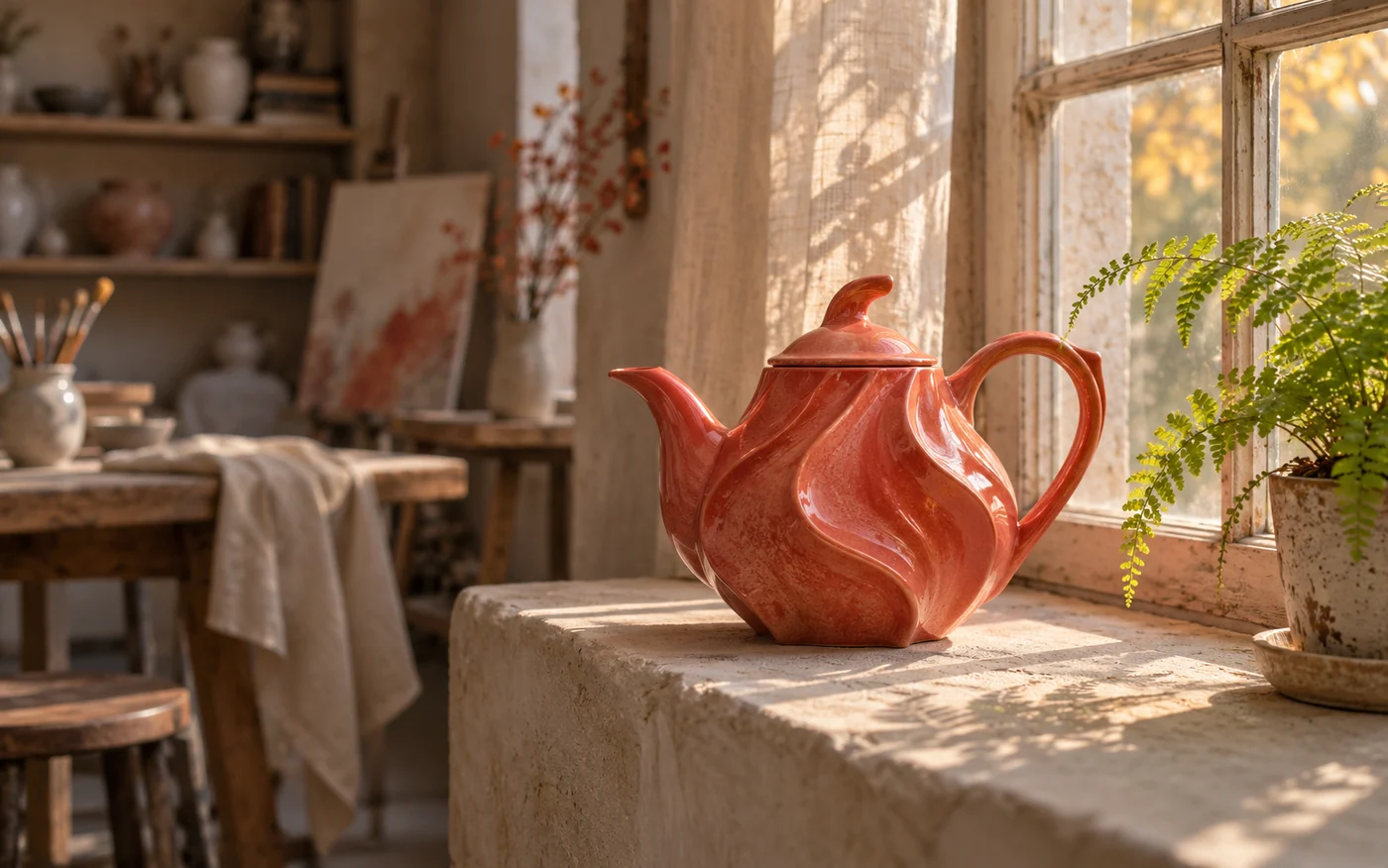
You don't have to fill in all six. Kling's prompt formula warns outright that piling on elements without a reason makes results worse. Pick what actually matters for this particular shot.
Start short, then build up
The Imagen guide demonstrates the technique with a spring park by a lake. A short prompt sets the foundation. Then you add a sunset over the lake and golden hour. Then red wildflowers. Each step brings the image closer to what you had in mind. The Solistra illustrations below show three separate scenes: a wide view of the park, a footbridge in evening light and flowers by the water.
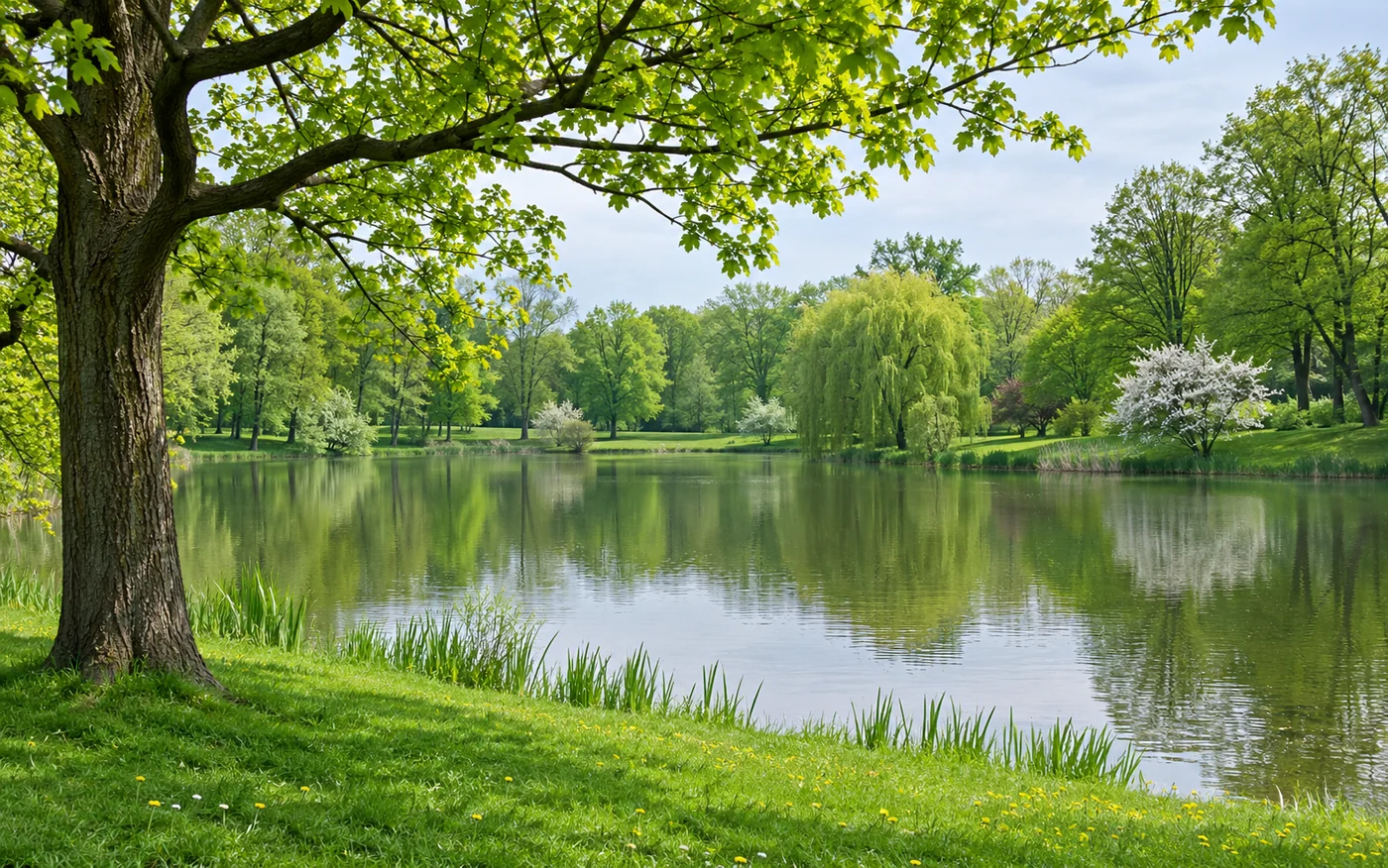
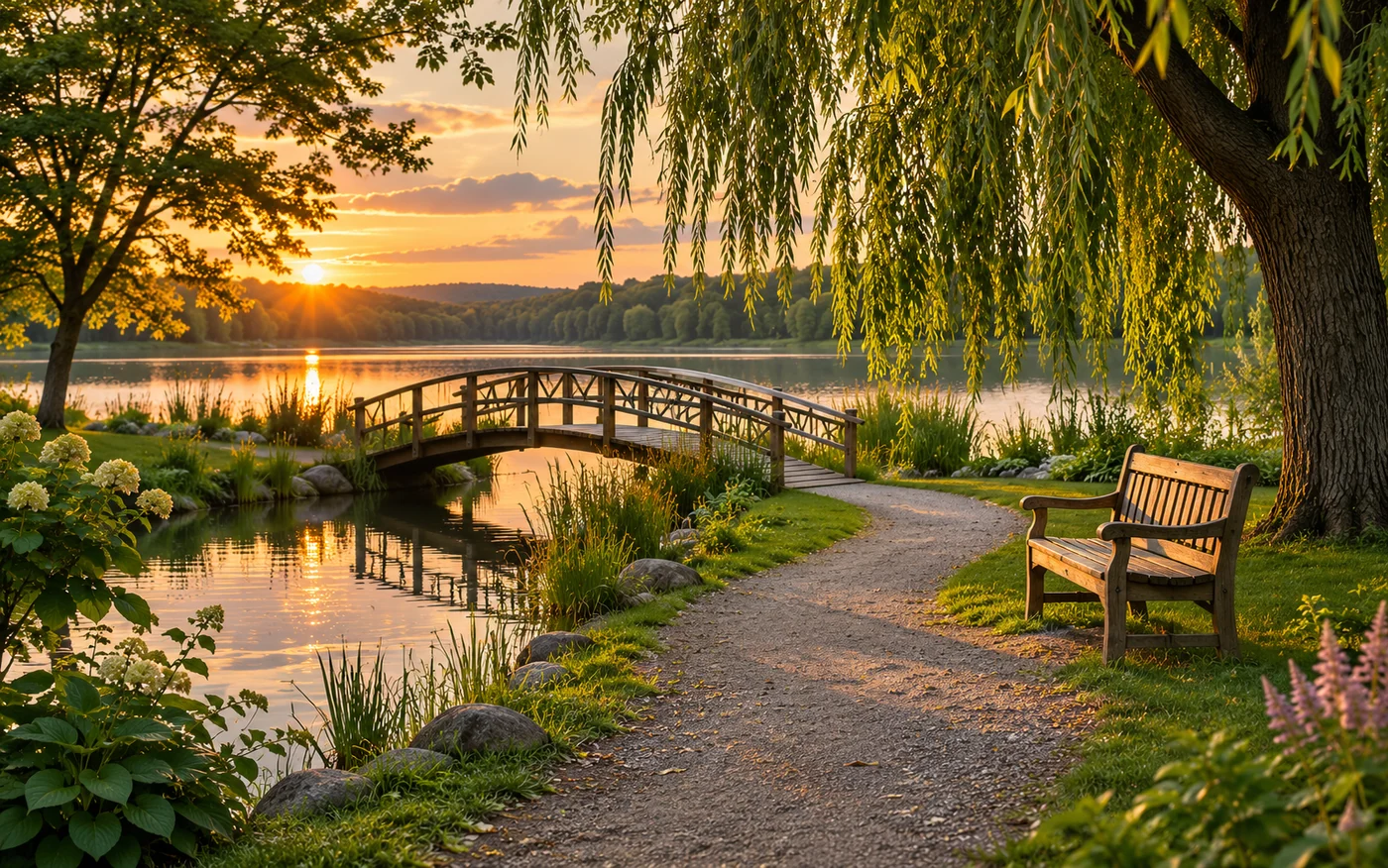
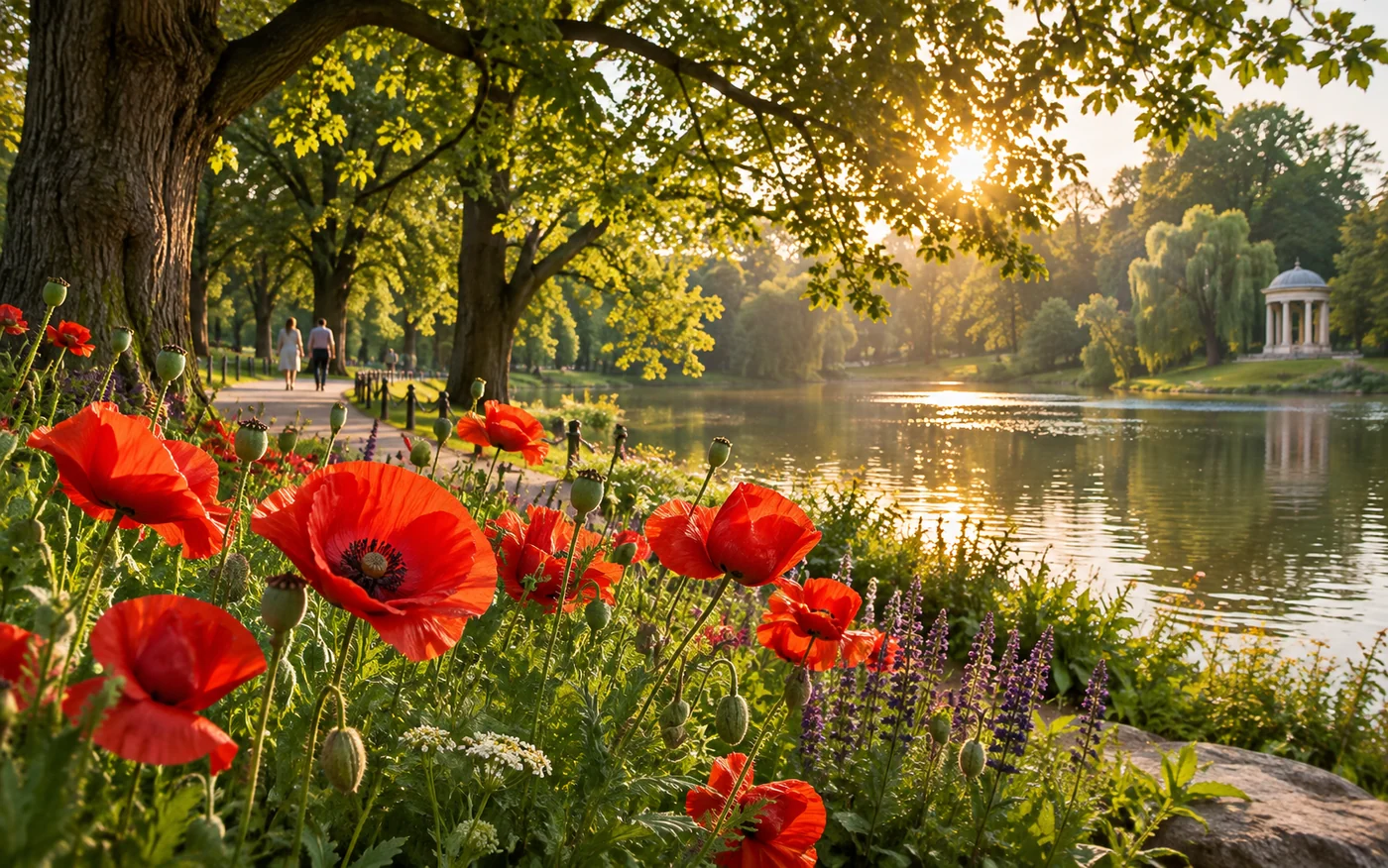
OpenAI gives the same advice: refine one thing at a time and check the result. If you change the lighting, the pose and the style all at once, you won't know which change did the trick.
Write sentences, not keyword lists
Models understand a description better when the relationships are spelled out: who is holding what, what stands behind what, where the light is coming from. The FLUX guide recommends full sentences for how objects relate to each other and short phrases for style, color and light.
Another FLUX tip: describe only what can be seen in the frame. Words like "masterpiece," "stunning" or "iconic" don't name anything concrete. The Imagen guide does mention quality modifiers such as "4K" or "professional photo," but a specific detail is almost always more useful.
What to leave out
- Negatives. In "no people," the model sees the word "people" and sometimes draws them. The Imagen guide advises against writing "no" and "don't," while FLUX and Gemini suggest describing what should be there instead: "an empty waterfront" rather than "a waterfront with no people."
- Contradictions. "Soft diffused light" and "hard crisp shadows" in the same prompt fight each other.
- Exact counts. Kling notes that video models are bad at holding numbers. "Ten puppies on a beach" will almost certainly not come out as exactly ten.
- Long lists of styles. Five artists and three art movements blend into a vague mush.
- Technical settings instead of a description. Aspect ratio, duration and quality are chosen in the Solistra prompt bar, so there's no need to repeat them in the text. The scene should still suit the format you picked, though.
How a video prompt is different
Video adds time. Kling structures a prompt like this: the subject and its description, the subject's movement, the scene, and then camera language, lighting and atmosphere.
- Movement. What happens over the few seconds of the clip. One clear action beats three.
- Camera. Whether it moves: a push-in, an orbit, a tracking shot following the character. More in the guide on camera movements.
- Simplicity. Kling recommends plain words and a simple scene that fits into a short clip.
- Sound. If the model can generate audio, describe it separately: rain, a voice, music. More in the guide on sound in video.
Prompt examples
Portrait of an elderly man in a knitted sweater by the window of his workshop, examining an old pocket watch. Soft daylight from the left shows his wrinkles and skin texture. Medium shot, 50mm lens, shallow depth of field, warm calm tones
A mountain lake at dawn, mist over the water, a wooden rowboat on the shore. The pink sky reflects in the still water, snowcapped peaks in the distance. Wide angle, everything in focus, a quiet cool palette
Watercolor illustration for a children's book: a hedgehog in a red scarf carrying a basket of apples along a forest path in autumn. Soft bleeding colors, textured paper, warm ochre tones
A young woman in a yellow raincoat walks down a wet street in an old town and opens a clear umbrella. The camera slowly moves ahead of her. Evening, streetlights reflected in the puddles, the soft sound of rain
A barista pours milk into a cup and draws a heart in the foam. The camera smoothly pushes in from a medium shot to a close-up of the cup. Morning light through the coffee shop window, steam rising from the cup, the gentle sound of pouring milk
What to read next
- Light and camera in a prompt: shot size, angle, lens and lighting.
- Text in images: lettering, posters and logos.
- References: steering the result with images.
- How to choose a model for a specific task.
The cost of a generation in credits shows on the run button before you click it. Try these prompts in Image («Фото») or Video («Видео»).
Try it in Solistra
Sources and licenses
- Prompt and image attribute guide — Vertex AI — Google — CC BY 4.0
- Gemini API — image generation and editing — Google — CC BY 4.0
- FLUX — prompting basics — Black Forest Labs
- FLUX — technical parameters and aspect ratio — Black Forest Labs
- OpenAI — image prompting guide — OpenAI
- Kling — text-to-video prompt guide — Kling AI
- Kling — AI image prompt formula — Kling AI
- Text
- Solistra text. Our own wording and prompt examples, quotes under 15 words
- Images
Other images — Solistra image
- Checked
- November 12, 2026