Photo effect
Prism Light
colored light refractions on a portrait
Prism Light («Призма») paints a portrait with a play of light. Rays bend as if passing through a prism and land on the frame as colored flares, turning an ordinary snapshot into an artistic portrait.
Try this effect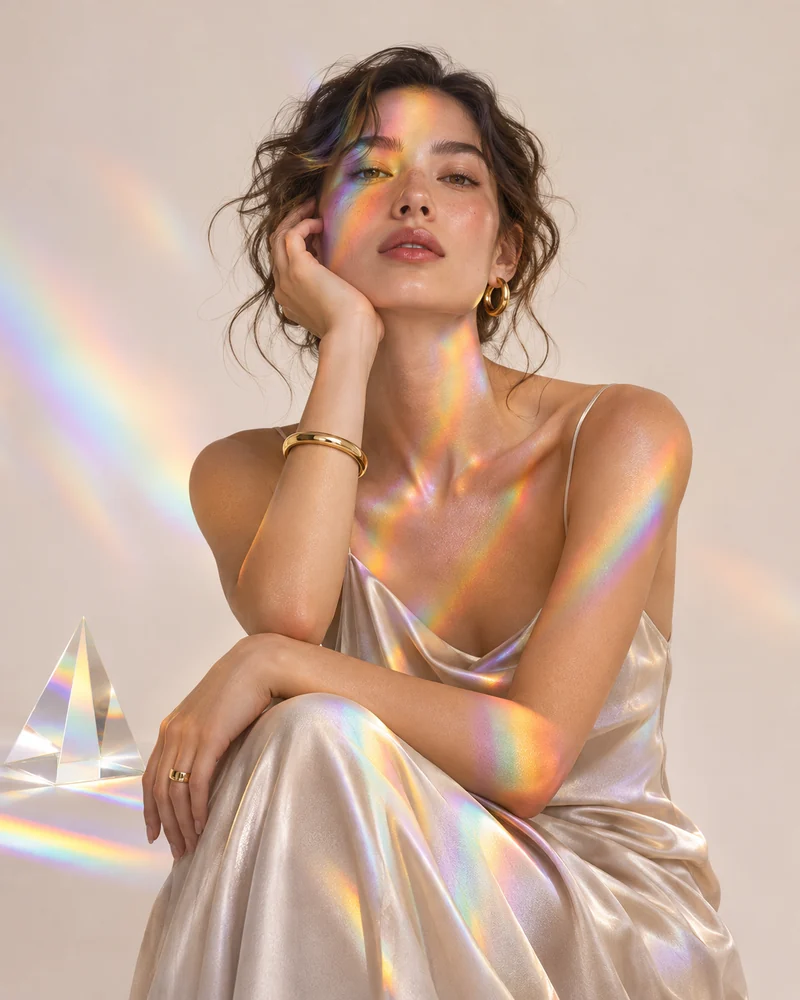
What the effect does
Photographers sometimes hold a prism in front of the lens to catch colored reflections in the frame. The effect reproduces that trick: colored flares and traces of refracted light appear on the portrait and make the shot dreamy and unusual. Unlike Neon Glow, there is no night city and no cyberpunk look here, and all the expression rests on the refracted light over the portrait.
No prompt is needed. Choose a format from 4:5, 1:1 and 16:9. The credit price is visible on the button before you start, and the result is stored in your Library («Библиотека»).
Which photo works best
Upload a portrait to the photo field or choose a shot from your Library. The hint for this effect: the whole face is visible and the light is even. Even source light without colorful lamps or strong shadows leaves room for the effect's colored flares. Both a close-up portrait and a head-and-shoulders shot work. Upload a photo of another person only with their consent.
How to get the best result
- 01
A close-up portrait leaves the colored flares more room on and around the face
- 02
Avoid shots with colored lighting, otherwise it mixes with the refraction flares
- 03
A 1:1 square suits a track cover or a creative profile avatar
- 04
Compare a couple of runs, since the pattern of colored flares can fall differently each time
Frequently asked questions
Can I get a prism effect without a real prism?
Yes, the effect adds the colored flares and refracted light to the portrait itself. You need no glass and no special shoot, just a shot with a clearly visible face and even light.
Will the colored flares cover the face in the portrait?
The flares sit on top of the portrait and sometimes touch part of the face, which is part of the artistic technique. If the result feels too busy, run the effect again or refine the frame with your own prompt in the Image section.
Which format is best for a prism portrait?
The vertical 4:5 is the default and suits a post, a 1:1 square is handy for an avatar, and a wide 16:9 leaves more background for the play of light.